
The Future of Artificial Intelligence Feels Closer Than We Expected
Not too long ago, AI sounded like one of those “future” things people talked about but never really experienced in daily life.
Now it’s hard to avoid.
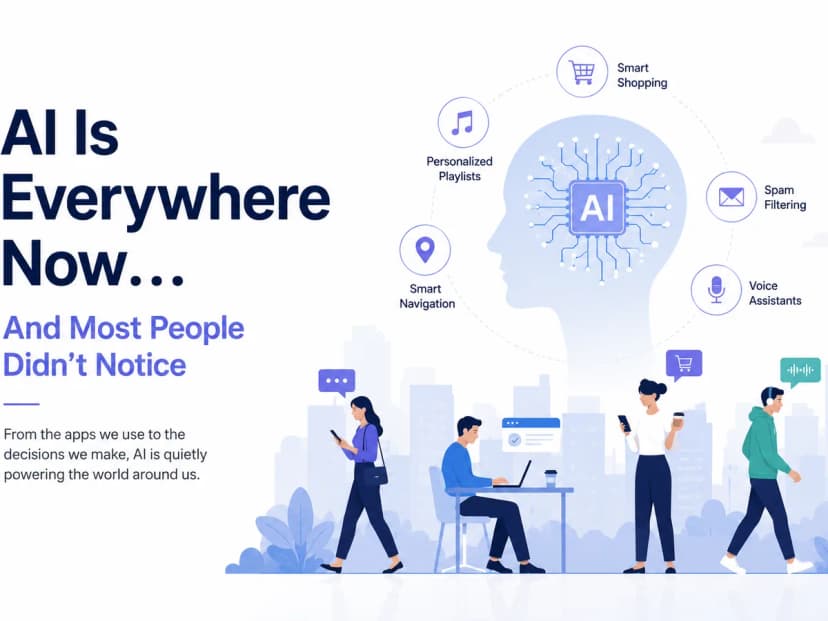
You open your phone and AI is already there — recommending videos, filtering spam calls, suggesting replies, even editing photos automatically. Most of us started using AI before we even realized it.
And honestly, it’s moving faster than people expected.
A couple of years back, if someone said AI could help write articles, generate images, or answer questions like a real conversation, most people would’ve laughed it off. But now students, businesses, freelancers, and even small shop owners are using AI tools almost every day.
That’s why the discussion around AI feels different now. It’s no longer just about technology. People are starting to wonder how much daily life is going to change because of it.
Work Is Already Changing
One thing I’ve noticed is that AI is quietly changing the way people work.
Not dramatically overnight — just slowly replacing small tasks.
Writers use AI to brainstorm ideas. Designers use it to speed up editing. Businesses automate customer support. Developers use coding assistants. Even teachers and students have started depending on AI tools for research and summaries.
The interesting part is that people who know how to use AI properly are usually finishing work faster than before.
That doesn’t mean talent suddenly stopped mattering. It just means the tools are changing.
The Fear Around Jobs Is Real
Whenever technology grows this quickly, people naturally get nervous.
A lot of workers are worried that AI will eventually replace them. And to be fair, some jobs probably will change a lot.
But this has happened before.
People had similar fears when computers became common. Then smartphones changed industries again. The internet did the same thing years earlier.
Usually, technology removes some jobs, changes many others, and creates completely new opportunities that nobody expected in the beginning.
AI will probably follow the same pattern.
Not Everything About AI Feels Comfortable
At the same time, there are things about AI that honestly feel a little strange.
Sometimes AI-generated content already looks so real that it’s difficult to tell what’s fake and what isn’t. Deepfake videos, fake voices, edited images — all of this is becoming easier to create.
And that raises a serious question:
just because technology can do something, does that mean it always should?
I think this is where people become divided. Some see AI as exciting progress. Others feel it’s moving too fast.
Maybe both sides are right in their own way.
AI Still Doesn’t Feel “Human”
Even though AI has become impressive, there’s still something missing.
Real human experiences, emotions, opinions, mistakes — those things still matter.
AI can generate answers quickly, but it doesn’t actually live life. It doesn’t understand pressure, relationships, failure, ambition, or personal experiences the way humans do.
That’s probably why human creativity still feels different.
And honestly, I don’t think people will stop valuing that anytime soon.
So What Does the Future Look Like?
Nobody really knows for sure.
Maybe AI becomes a normal everyday tool like the internet did. Maybe entire industries change because of it. Maybe schools and workplaces start functioning completely differently in the next 10 years.
But one thing seems obvious already:
AI is not going away.
The people who adapt to it early will probably benefit the most, while the people who completely ignore it may struggle later.
Final Thoughts
The future of Artificial Intelligence isn’t just about robots or advanced software anymore. It’s about how humans choose to use technology in real life.
Some changes will make life easier. Some may create new problems we haven’t fully understood yet.
But whether people love AI or hate it, it’s already becoming part of everyday life.
And this time, the future doesn’t feel far away at all.


Comments (0)